Profitability
How to tell if your food business is profitable
Selling more is not enough. Look at what each sale contributes, how much you sell, and what the business still needs to cover.

What does profitability depend on?
Look at these three parts to understand it more clearly.
Per sale
What each sale contributes
Selling price minus defined variable costs

In volume
How many sales you make
Sales volume

Across the business
What you still need to cover
Business costs
More sales do not always mean more contribution
Two menu items can sell the same number of units and still contribute very different amounts. The difference is in the selling price and the variable costs included for each one.
If an item contributes little per sale, increasing volume alone does not tell you whether the overall result is healthy.

That is why looking only at sales can be misleading. Contribution margin helps you understand what each sale contributes before deciding what to review or push.
Understand cost before changing the price
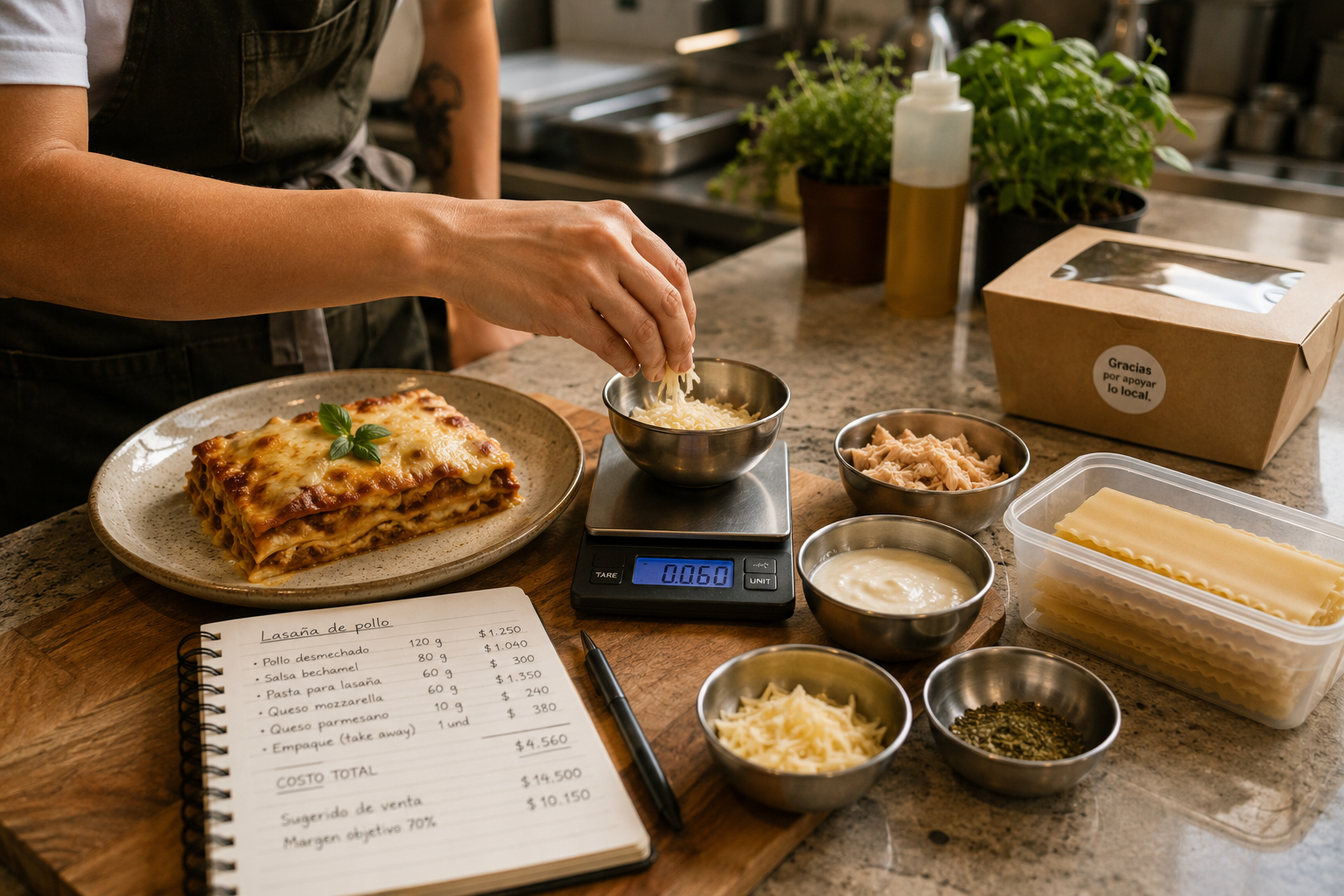
Start with the costs that belong to one portion and define clearly which of them change with the sale you are analyzing.
Without a consistent cost base, any comparison of price or contribution starts from incomplete information.

With that base, you can review price more deliberately without confusing the cost of one menu item with every other cost in the business.
Contribution still has to help cover the business
What remains after the defined variable costs still has to help cover costs that are outside that subtraction. The overall result therefore depends on both sales volume and the structure of the business.
A strong contribution per sale is not enough if total sales do not cover the costs that remain.

Break-even analysis connects those two parts and helps show how much the combined contribution from sales needs to cover before you talk about profit.