Operations
How to improve your food business operations
Clear operations connect what should happen, how it gets executed, and how consistently the expected result is delivered.

What makes operations consistent?
Separate four parts before asking the team to work faster.

Standard
What should happen
Recipes, portions, and criteria for the expected result

Flow
How work moves
Sequence, coordination, and waiting points
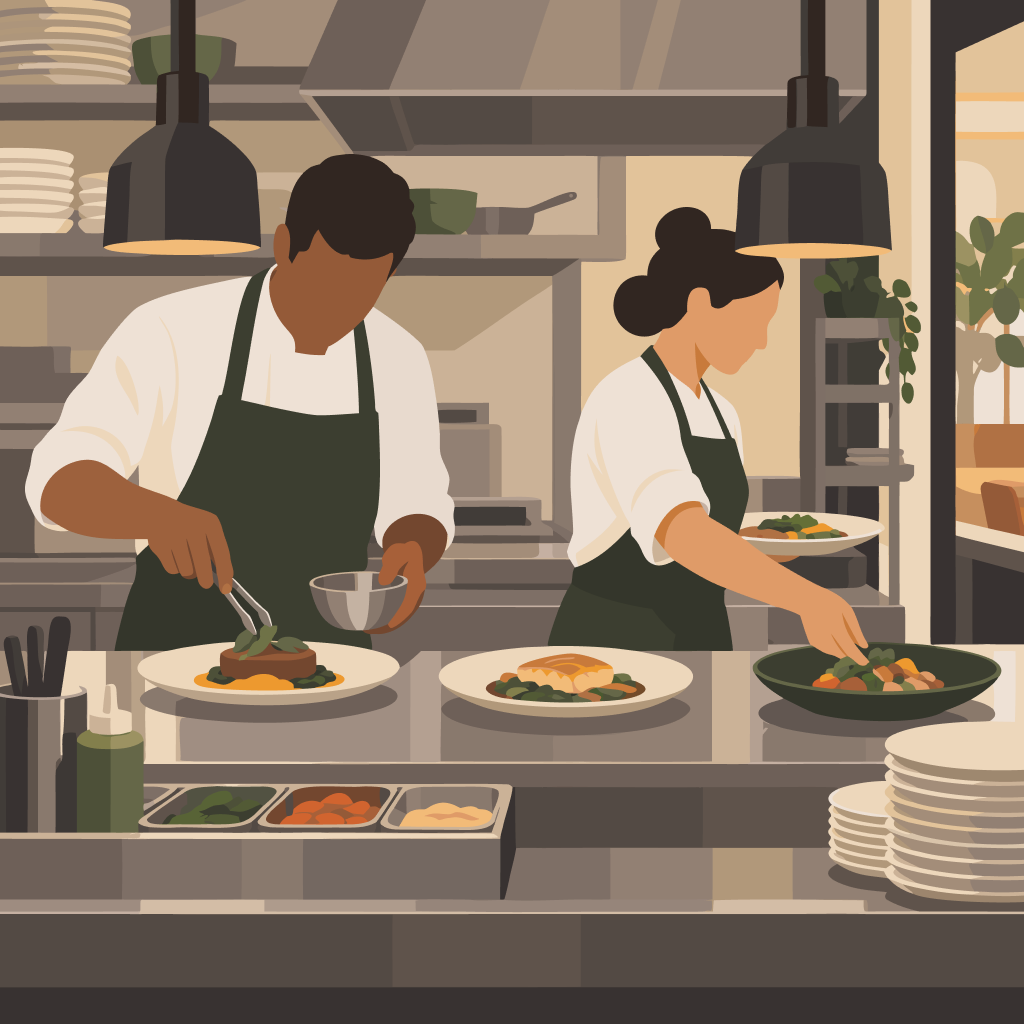
Capacity
What you can sustain
Workload the team can sustain without degrading results
Control
Where variation appears
Signals that make useful variation visible
Clear operations reduce variation
When the standard lives only in one person's memory, every shift can solve the same work differently.
Standardizing does not mean making the team rigid.

It means making the expected result visible and identifying which parts need to stay stable so deviations can be recognized.
Recipes, portions, and timing make the standard visible
An operational recipe is more than a list of ingredients: it helps repeat quantities, sequence, presentation, and relevant control points.
The level of detail should serve real work rather than create documentation nobody uses.
The goal is to let another person execute with less ambiguity and give the business a common basis for comparing results.
Improvement starts by finding repeated friction
Repeated errors, waiting, rework, and variation are signals that a process deserves attention.
Not every delay is solved by asking the team to work faster.

First identify where friction accumulates and whether the cause is the standard, coordination, capacity, or available information.